Source Sequin Tail Metal Fishing Lure for River Lake Ocean
Compare 30 sequin tail metal fishing lure options from verified suppliers. View specifications for freshwater casting, saltwater trolling, and jigging across multiple models and weights.
Key considerations
Products List


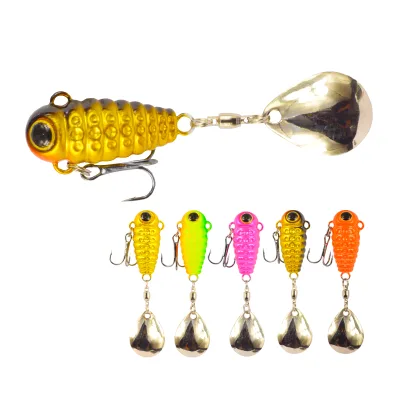


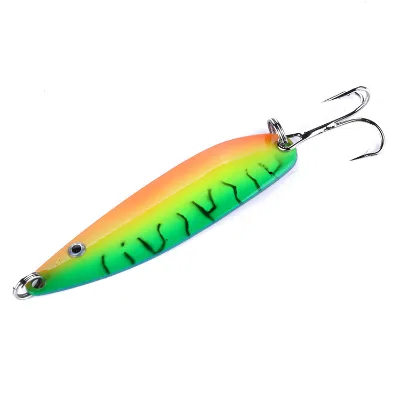
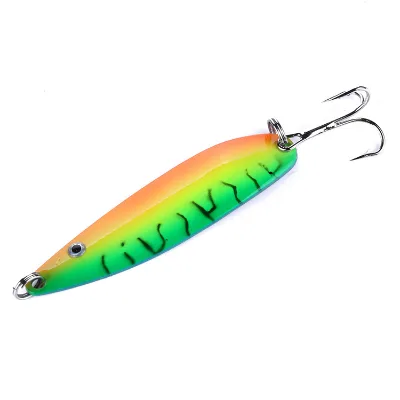


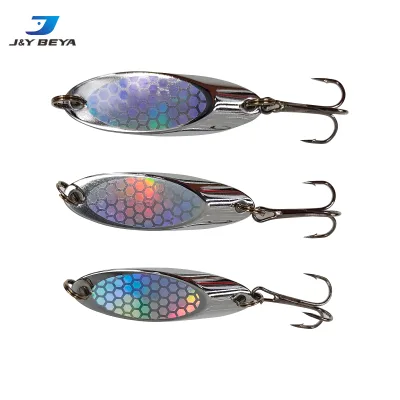

Comprehensive Sourcing Guide
Strategic Sourcing Guide for Sequin Tail Metal Fishing Lures
The global market for artificial fishing tackle continues to evolve, with the sequin tail metal fishing lure representing a high-performance segment that combines visual attraction with durable construction. For B2B procurement professionals, sourcing these specific lures requires a nuanced understanding of material science, manufacturing standards, and supply chain logistics. This guide synthesizes available product data and industry best practices to provide a structured approach for evaluating suppliers, verifying technical specifications, and ensuring long-term supply chain stability. The focus remains on evidence-based decision-making, utilizing observed product attributes to inform procurement strategy without relying on unverified market claims.
Technical Specifications and Material Composition
The foundation of a successful procurement strategy lies in a precise definition of technical requirements. The core keyword "sequin tail metal fishing lure" implies a specific construction where metal forms the primary body, often supplemented by reflective sequins to enhance visibility in various water conditions. Based on observed product data, the primary material composition for these lures is consistently identified as metal, with specific instances noting the use of lead for weight distribution. This distinction is critical for buyers, as lead-based lures offer different sinking rates and casting distances compared to other metal alloys.
The physical dimensions and weight specifications vary significantly across product lines, reflecting the diverse needs of different fishing environments. Observed models, such as the LF-01, LF-05, and LF-67, demonstrate a wide range of standard weights. For instance, the LF-01 series supports weights ranging from 100g to 400g, while the LF-67 series is tailored for lighter applications between 120g and 150g. Conversely, the LF-24 model indicates a much lighter profile, with standards ranging from 7g to 80g. This variance suggests that a single supplier may offer a comprehensive catalog, but buyers must verify the specific weight standard required for their target application.
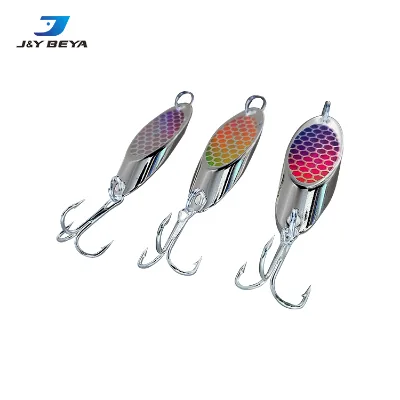
Furthermore, the physical attributes of the lure, such as body length and single package size, are essential for logistics planning. Specific data points indicate a body length of 35mm for certain models, with a single package size of 17x12x1 cm. These dimensions directly impact packaging efficiency and shipping costs. The "sequin tail" aspect is often associated with rotation spoon designs, as seen in models described as "Pupa type Spinner Lure with Rotation Spoon Sequins." These lures are engineered to create a specific vibration and flash pattern, which is a key selling point for predatory fish species. Buyers should verify that the sequin attachment method ensures durability during high-impact casting and retrieval, as loose sequins can compromise the lure's effectiveness.
Compliance, Certification, and Regulatory Standards
In the international trade of fishing tackle, compliance with safety and environmental regulations is paramount. While specific certification documents were not explicitly listed in the provided product facts, the presence of "OEM" and "ODM" service options suggests that suppliers are capable of meeting specific buyer requirements regarding material safety and manufacturing standards. The material composition, particularly the use of lead, requires careful attention to regional regulations. Many jurisdictions have strict limits on lead content in products intended for recreational use due to environmental concerns regarding water contamination.
Buyers must verify that the supplier adheres to the relevant standards for the destination market. The observed product data lists specific weight standards (e.g., 60g, 80g, 100g, 120g, 150g, 200g, 300g, 400g), but it does not explicitly confirm compliance with international chemical safety standards such as REACH or CPSIA. Therefore, the procurement process must include a mandatory request for material safety data sheets (MSDS) and compliance certificates for lead content. The "Standard Export Carton" and "PVC Bag with Papercard" packaging methods observed in the data indicate a focus on export readiness, but the buyer must confirm that the packaging materials themselves meet environmental regulations in the target region.
Additionally, the "Customization: Available" attribute implies that suppliers can modify product specifications. This flexibility allows buyers to request lead-free alternatives or specific finishes that comply with local environmental laws. However, the buyer should not assume that all customizable options are automatically compliant. A rigorous audit of the supplier's quality management system is necessary to ensure that customization requests do not inadvertently introduce non-compliant materials or processes. The "Service: OEM ODM" designation further reinforces the need for a contractual agreement that explicitly defines compliance responsibilities and liability in the event of regulatory non-conformance.
Cost Drivers and Pricing Dynamics
Understanding the cost structure of sequin tail metal fishing lures is essential for budgeting and margin analysis. The observed price range in the market spans from $0.13 to $19.56 USD, a significant variance that reflects differences in material quality, manufacturing complexity, and order volume. The lower end of this spectrum likely corresponds to basic metal lures with standard packaging, while the higher end may include premium finishes, complex sequin mechanisms, or specialized packaging.
The Minimum Order Quantity (MOQ) is a primary driver of unit cost. The observed MOQ range is 1 to 1000 pieces. Suppliers with an MOQ of 1000 pieces, such as those associated with the QY-J model, typically offer lower per-unit costs due to economies of scale. Conversely, suppliers accepting orders as low as 1 piece may charge a premium to cover setup and handling costs. Buyers must balance the need for inventory flexibility with the desire for cost efficiency. For large-scale procurement, negotiating an MOQ closer to the 1000-piece threshold can yield significant savings.
Packaging requirements also influence the final cost. The data indicates various packaging options, including "PVC Bag with Papercard," "Standard Export Carton," and "25kg" bulk packaging. Bulk packaging, such as the 25kg option, generally reduces per-unit packaging costs but requires more storage space and handling equipment. The choice between "Sea" and "Air" shipping methods, as noted in the packing specifications, further impacts the landed cost. Air freight is faster but significantly more expensive, making it suitable for urgent, low-volume orders, whereas sea freight is more cost-effective for large, planned shipments. Buyers should calculate the total landed cost, including freight, duties, and packaging, rather than focusing solely on the unit price.
Typical Applications and Market Segmentation
The versatility of sequin tail metal fishing lures makes them suitable for a wide array of fishing scenarios. The observed product data categorizes these lures into several types, including "Jigbait Lure," "Spinner Lure," "Vibra Lure," "Swim baits," and "Hard Baits." This diversity allows buyers to target multiple market segments simultaneously. The specific applications listed include "STREAM," "River," "Lake," "Ocean Beach Fishing," "Ocean Boat Fishing," and "Ocean Rock Fshing." This broad applicability suggests that these lures are designed to perform in both freshwater and saltwater environments.
The "Fishing Lure Type" attributes further refine the target audience, listing categories such as "Freshwater Casting," "Freshwater Trolling," "Saltwater Casting," "Saltwater Trolling," "Jigging Lures," "Perch Lures," "Zander Lures," and "Metal Lures." This indicates that the lures are engineered to attract specific species like perch and zander, as well as general predatory fish in various conditions. The "Position" data highlights the lures' suitability for reservoirs and ponds, expanding their utility beyond open water fishing.
Buyers should align their procurement strategy with the specific fishing environments of their target customers. For example, lures with heavier weights (e.g., 300g, 400g) are better suited for deep-water trolling or ocean boat fishing, while lighter models (e.g., 7g, 10g) are ideal for stream or river fishing. The "Color: OEM" and "Color: Customerzed" options allow suppliers to produce lures that match local market preferences, which can be a significant competitive advantage. Understanding these application nuances helps buyers select the right product mix to meet diverse customer needs.
Supplier Evaluation and Geographic Considerations
Evaluating potential suppliers requires a focus on their geographic location, production capabilities, and service offerings. The observed product data identifies two primary origins: "Weihai China" and "Guangdong." Weihai is known for its strong manufacturing base in the fishing tackle industry, while Guangdong is a major hub for general manufacturing and export. The "Place of Origin: CN;SHN" data further confirms the Chinese manufacturing base, which is a common source for cost-effective fishing lures.
When evaluating suppliers, buyers should prioritize those with a proven track record in OEM and ODM services. The "Service: OEM ODM" attribute indicates that suppliers are capable of customizing products to meet specific brand requirements. This is crucial for buyers looking to establish a unique product line. Additionally, the "Customization: Available" feature suggests that suppliers are flexible in adjusting specifications, such as weight, color, and packaging.
Buyers should also assess the supplier's logistics capabilities. The "prod_prop.prod_packing" data mentions options for "Sea by Air" shipping, indicating that suppliers are experienced in handling international freight. However, buyers must verify the supplier's reliability in meeting lead times and ensuring consistent quality. The "MOQ: 1000pcs" requirement for some models suggests that larger suppliers may be more stable but less flexible for small orders. A balanced approach involves diversifying the supplier base to include both large-scale manufacturers for volume orders and smaller suppliers for niche or urgent needs.
Quality Control and Long-Term Procurement Strategies
Ensuring consistent quality is a critical component of long-term procurement success. The observed product data includes specific weight standards and packaging details, which serve as baseline quality indicators. However, buyers must implement a robust quality control (QC) process to verify that every shipment meets these standards. This includes checking for defects in the metal construction, the integrity of the sequin attachment, and the accuracy of the weight distribution.
For long-term procurement, buyers should establish clear communication channels with suppliers to address any quality issues promptly. The "Brand Name: AFISHLURE" and "Product name: Pupa type Spinner Lure with Rotation Spoon Sequins" data points suggest that some suppliers have established brand identities, which can be a proxy for quality consistency. Buyers should request samples from different production batches to ensure consistency over time.
Additionally, buyers should consider the scalability of their supply chain. As demand grows, the ability to increase order volumes without compromising quality or lead times becomes essential. The "Standard Export Carton" and "PVC Bag" options indicate that suppliers are prepared for export, but buyers should verify that the packaging is durable enough to withstand long sea voyages. Finally, maintaining a relationship with suppliers who offer "OEM ODM" services ensures that the buyer can adapt to market changes and introduce new products as needed.
Conclusion
Sourcing sequin tail metal fishing lures requires a comprehensive approach that balances technical specifications, compliance requirements, cost considerations, and supplier capabilities. By leveraging the observed product data and adhering to strict quality control measures, buyers can build a resilient supply chain that meets the demands of the global fishing tackle market. The key to success lies in thorough due diligence, clear communication, and a strategic alignment of procurement goals with supplier strengths.
FAQs
What materials are used for sequin tail metal fishing lures?
The primary material is metal, with specific models using lead for weight distribution. Buyers should verify material safety data sheets to ensure compliance with environmental regulations regarding lead content in their target markets.
Which weight standards are available for these metal lures?
Standard weights range from 7g to 400g across different product models like LF-01 and LF-24. Heavier options suit deep-water trolling, while lighter models are ideal for stream or river fishing applications.
Can suppliers offer customization for color and packaging?
Yes, customization is available for colors and packaging options like PVC bags or export cartons. Buyers can request specific finishes or bulk packaging, but they must confirm that custom materials meet local safety standards.
How does the minimum order quantity affect unit pricing?
MOQs range from 1 to 1000 pieces, with higher volumes typically lowering the unit cost. Orders near the 1000-piece threshold offer better economies of scale compared to small sample orders with higher per-unit fees.
What shipping methods are supported for these fishing lures?
Suppliers support both sea and air freight depending on the order urgency and volume. Sea freight is cost-effective for large shipments, while air freight is suitable for urgent, lower-volume orders requiring faster delivery.
Where are the manufacturing origins for these lures located?
Products originate from Weihai and Guangdong in China, which are established manufacturing hubs for fishing tackle. Buyers should verify the specific factory location to assess logistics costs and supply chain reliability for their region.